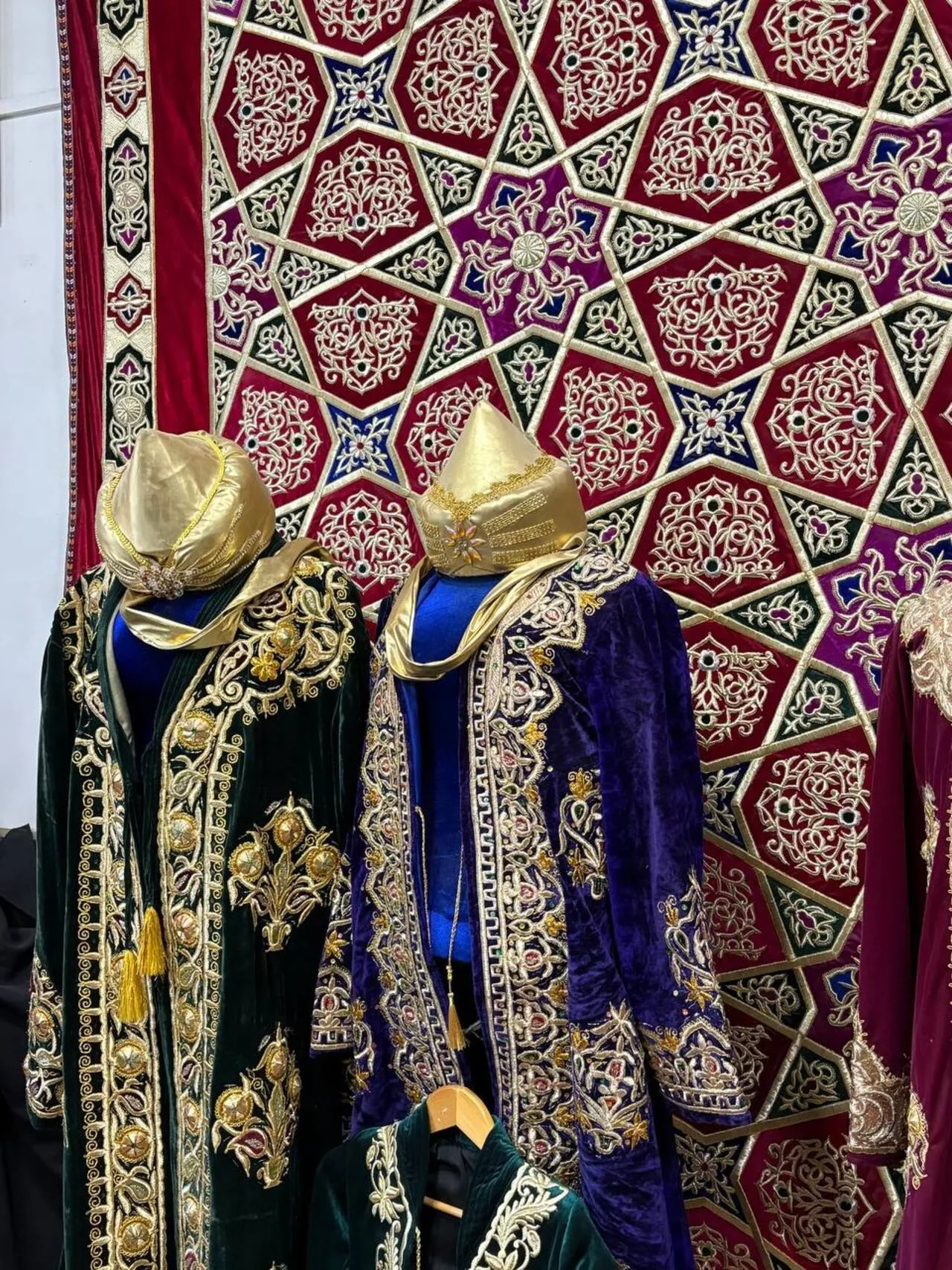
What It's Actually Like to Meet the Textile Artisans of Fergana Valley
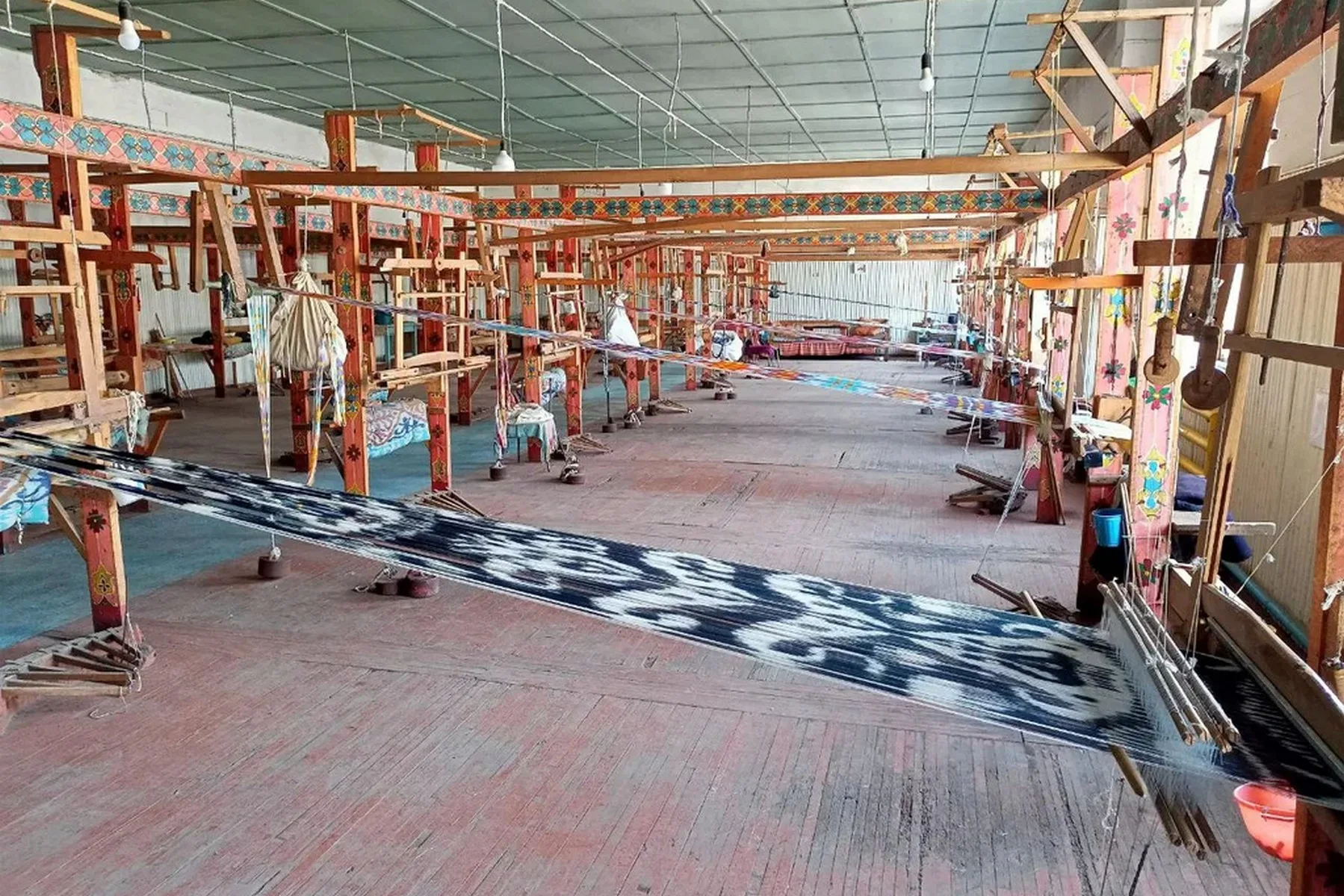
The loom made more noise than I expected — not a hum, a clatter, wood striking wood on every pass of the shuttle. I stood in the doorway of a family workshop outside Margilan for a full minute before anyone noticed me, because the man at the loom wasn't going to stop mid-row to say hello. You don't interrupt a pass. I learned that within the first ten seconds.
This wasn't a single-craft afternoon. It was a day built around meeting several Fergana textile artisans in sequence — a resist-dyer, a weaver, and an embroiderer — inside three working households, not staged demonstrations. CraftNCulture had warned us in advance: nobody would be performing for us. If a dye batch needed another twenty minutes in the vat, we'd wait twenty minutes. That turned out to be true, and it was the best part of the day.
How I Got Here
I joined a six-person group traveling through the Fergana Valley — Tashkent, then east past Kokand, into the valley proper. Most Silk Road itineraries treat Fergana as a drive-through: a photo stop at a bazaar, maybe a ceramics shop in Rishtan, then back on the road to Samarkand. That's not what this was. We spent the whole day among Fergana textile artisans who don't set up for tour buses, because tour buses generally don't come.
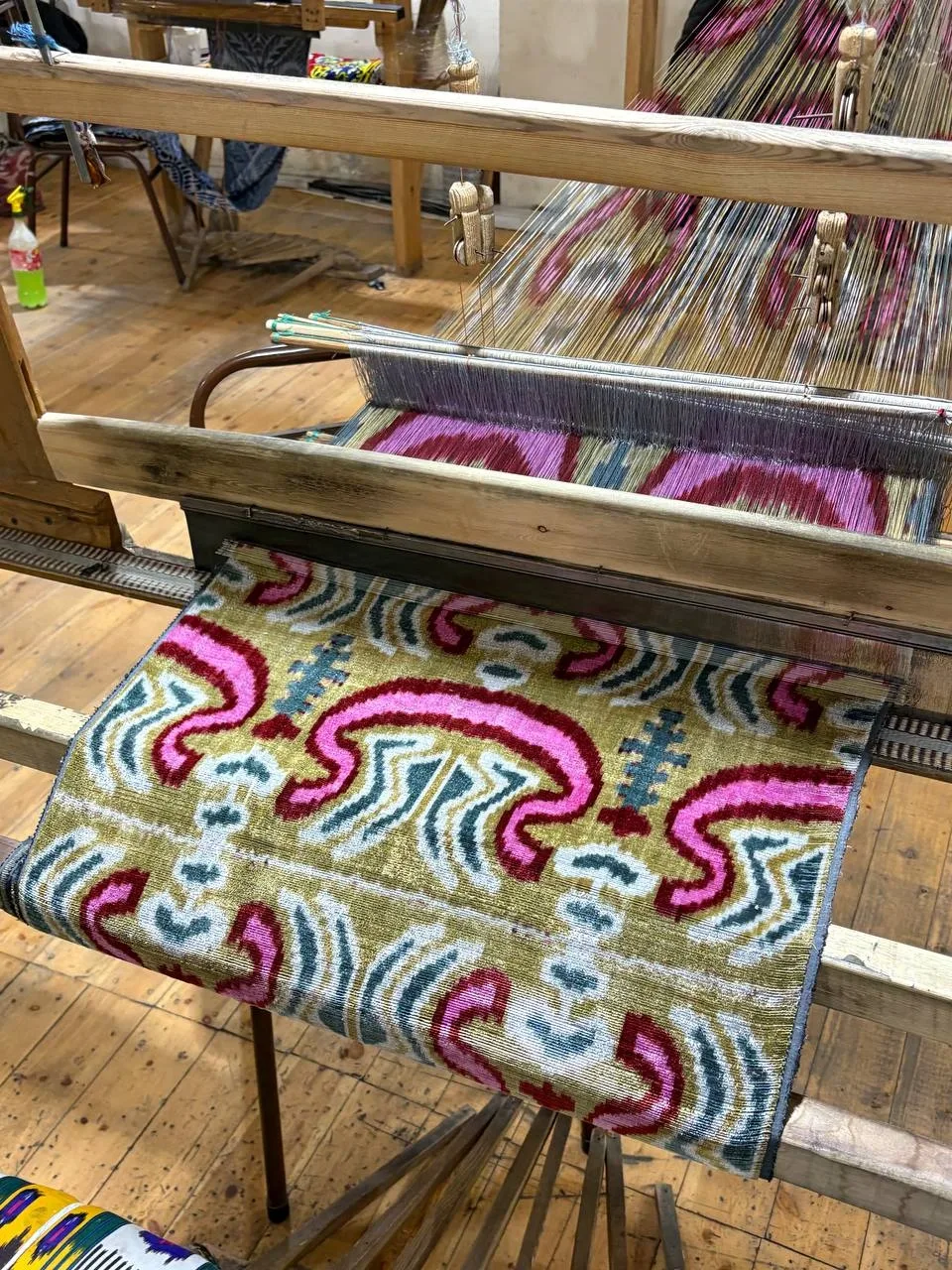
I'd read about ikat before arriving — the resist-dyeing technique where thread is tied and dyed in patterns before it's ever woven, so the design only resolves once the loom pulls it into alignment. Reading about it and standing over a dye vat watching a pattern that shouldn't exist yet slowly become legible are different experiences. The second one is better.
Inside the Workshop
The first stop was a dye house — low ceiling, walls stained the color of every batch that had ever been mixed there. Ochilbek, who runs it with his two sons, showed us the tying process first: cotton or silk thread bound section by section with waxed cord, so the dye can't reach the bound parts. Untie it wrong, or tie it loose, and the whole pattern blurs. He let each of us tie one small section of thread. Mine was uneven — the sections came out different widths, which he pointed out without making it feel like a failure, just a fact, the way you'd note a crooked nail.